
Study in the USA After Intermediate from Pakistan: A Complete 2026 Guide
Study in USA After Intermediate from Pakistan is one of the best opportunities for students who want to earn a globally recognized degree and build an international career. Every year, thousands of Pakistani students apply to American universities after completing FSc, FA, ICS, ICom, or A-Levels. This complete 2026 guide explains admission requirements, tuition fees, scholarships, visa procedures, and the application process.
Why Study in USA After Intermediate from Pakistan?
American universities are built around research, practical learning, and career readiness — not just exams. Key advantages include:
- Globally recognized universities and degrees
- Flexible, interdisciplinary programs
- Strong internship and practical training culture
- Competitive graduate salaries and long-term career pathways
Admission Requirements to Study in USA After Intermediate from Pakistan
Students who have completed FA, FSc (Pre-Medical or Pre-Engineering), ICS, ICom, or A-Levels are eligible to apply directly for undergraduate (Bachelor’s) programs. Some universities may first require a foundation or pathway program, depending on the applicant’s academic background.
Popular Fields of Study
- Engineering: Civil, Mechanical, Electrical, Chemical, Aerospace
- Computer & IT: Computer Science, AI, Cybersecurity, Software Engineering, Data Science
- Business: Business Administration, Accounting, Finance, Marketing
- Health Sciences: Nursing, Public Health, Pharmacy (pathway), Biomedical Sciences
- Social Sciences: Psychology, Economics, Political Science
- Creative Programs: Graphic Design, Animation, Media Studies, Film Production
Top Universities for Pakistani Students
- Harvard University
- Stanford University
- Massachusetts Institute of Technology (MIT)
- University of California System
- Arizona State University
- Purdue University
- Michigan State University
- Northeastern University
Shortlist universities based on budget, program ranking, scholarship availability, and graduate employment outcomes.
Students planning to study in USA after Intermediate from Pakistan should prepare their academic documents early
Academic documents: Intermediate certificate and marks sheet, matriculation certificate, passport, recent photographs.
English proficiency: Most universities accept IELTS, TOEFL, the Duolingo English Test, or PTE Academic. Some waive this requirement depending on prior medium of instruction.
Academic threshold: Generally 60–70% marks; competitive universities may require 80% or above. Stronger records improve scholarship chances.
Documents checklist: Passport, academic transcripts, character certificate, recommendation letters, personal statement, resume (if applicable), English test score, financial documents.
Tuition and Living Costs (2026)
| University Type | Annual Tuition (USD) |
|---|---|
| Public | 12,000 – 25,000 |
| Private | 25,000 – 60,000+ |
| Living Expense | Annual Cost (USD) |
|---|---|
| Accommodation | 8,000 – 15,000 |
| Food | 3,000 – 5,000 |
| Transportation | 800 – 2,000 |
| Health Insurance | 1,000 – 2,500 |
| Miscellaneous | 2,000 – 4,000 |
Estimated total living expenses: USD 15,000–25,000 per year.
Scholarships make it easier to study in USA after Intermediate from Pakistan at affordable costs
Scholarships are typically awarded on academic merit, leadership, sports achievement, or financial need — including merit, international student, department-specific, and need-based awards. Scholarship deadlines often fall earlier than admission deadlines, so apply early.
The F-1 visa is required to study in USA after Intermediate from Pakistan.
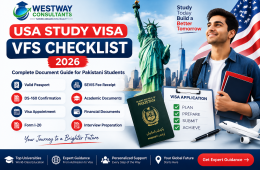
International students generally need an F-1 Student Visa. Our Student Visa Service team handles this process for our students, which follows these steps, per the U.S. Department of State:
- Receive university admission and Form I-20.
- Pay the SEVIS fee via Study in the States.
- Complete the DS-160 online application.
- Schedule and attend a visa interview.
International students may work on-campus during semesters, and may qualify for certain off-campus work authorizations once they meet U.S. immigration requirements.
Intake Seasons
- Fall (August–September): Largest intake, most programs and scholarships
- Spring (January): Secondary intake, fewer options
- Summer (May): Limited to select universities
Fall remains the most popular intake among Pakistani students.
How to Apply
- Choose your course and shortlist universities.
- Prepare academic documents and take an English proficiency test.
- Submit applications and accept your admission offer.
- Obtain your I-20 and apply for the F-1 visa.
- Book your flight and prepare for departure — see our pre-departure checklist for a full step-by-step rundown.
Career Opportunities After Graduation
Graduates find strong employment prospects in Technology, Healthcare, Engineering, Finance, AI, Business, and Data Analytics. A U.S. degree carries international recognition well beyond American borders.
Why Choose Westway Consultants?
Applying to U.S. universities involves university selection, document preparation, deadlines, and the visa process. Our Admission Guidance service supports students at every stage — from free career counselling and university selection to scholarship guidance, visa documentation, interview preparation, and pre-departure support.
Learn more about our team, or browse our blog for more study-abroad guides.
Can I study in USA after Intermediate from Pakistan?
Yes. Students who have completed FSc, FA, ICS, ICom, or A-Levels can study in USA after Intermediate from Pakistan by applying for undergraduate programs at accredited American universities.
Conclusion
If you plan to study in USA after Intermediate from Pakistan, start preparing your documents as early as possible. Research universities, apply before deadlines, and explore scholarship opportunities to reduce costs. With proper planning and expert guidance from Westway Consultants, Pakistani students can secure admission to leading American universities and begin a successful international career.