
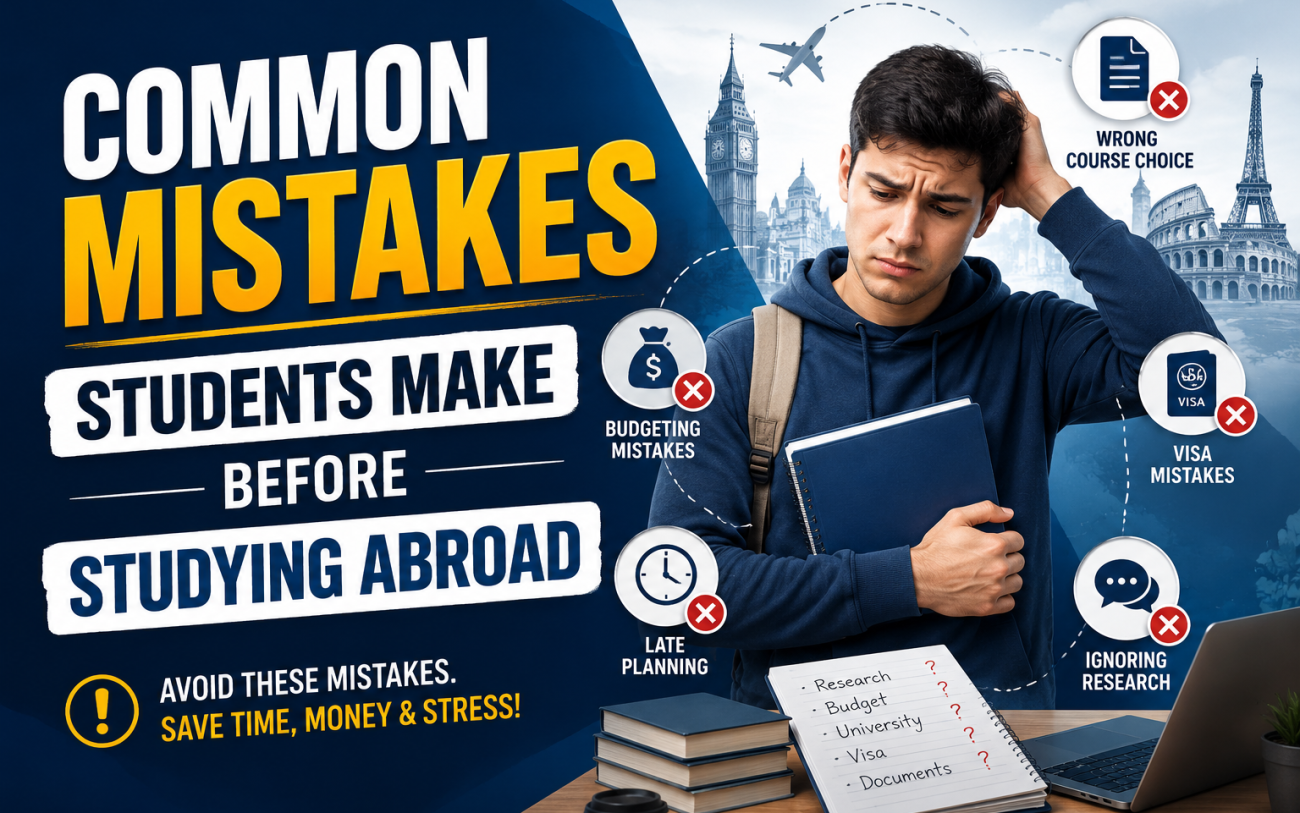
Common Mistakes Students Make Before Studying Abroad
Studying abroad is one of the most exciting decisions a student can make. It promises a new culture, an internationally recognized degree, and a level of independence that’s hard to find at home. But behind the excitement, thousands of students every year run into avoidable problems simply because of poor planning before they leave. Most of these mistakes aren’t about lack of intelligence — they’re about lack of preparation. Below is a detailed look at the most common mistakes students make before studying abroad, and how to avoid them.
1. Choosing a Country or University Based on Trends, Not Research
A lot of students pick a destination because “everyone is going there” or because of what they’ve seen on social media, without checking whether the country actually fits their academic goals, budget, or career plans. A university that’s a great fit for one student’s field might be mediocre for another’s. Before committing, students should research:
- University rankings specific to their intended major, not just overall rankings
- Post-study work visa policies in that country
- Cost of living, not just tuition
- Job market demand for their field after graduation
Skipping this step often leads to regret halfway through the program.
2. Underestimating the Total Cost
Many students budget only for tuition and forget the many hidden costs that come with living abroad — health insurance, visa fees, flights, security deposits, furniture, winter clothing, local transportation, and the higher cost of everyday groceries in a new country. A shockingly common mistake is arriving with just enough money to cover the first month, with no cushion for emergencies.
Tip: Build a detailed budget that includes a 3–6 month emergency fund, and research the exchange rate trends of your target country in advance.
3. Applying for a Visa Too Late
Visa processing times vary hugely by country and can range from a few weeks to several months, especially during peak application seasons. Students often wait until they’ve been accepted by a university to even start thinking about the visa process, which can lead to delayed arrivals, missed orientation weeks, or in the worst cases, deferred admission.
Tip: Start gathering visa documents (financial proof, medical exams, police clearance certificates, etc.) as soon as an offer letter is received — not after. Requirements differ by destination, so always check the official immigration source for your target country — for example, the UK’s official Student visa page or the U.S. Department of State’s Study & Exchange visa portal — rather than relying solely on third-party guides.
4. Not Researching the Cultural and Academic Differences
Education systems differ significantly across countries. Some rely heavily on independent research and critical thinking rather than rote memorization; others expect much more classroom participation than students may be used to. Cultural norms around punctuality, communication with professors, group work, and even everyday etiquette can also catch students off guard.
Going in without any cultural preparation often leads to unnecessary stress, culture shock, and even academic underperformance in the first semester.
5. Ignoring Language Requirements Beyond the Minimum Test Score
Passing an IELTS or TOEFL exam doesn’t automatically mean a student is ready to follow fast-paced lectures, participate in debates, or write academic essays in that language. Many students meet the minimum score requirement but haven’t practiced real-world academic or conversational fluency, which becomes a serious handicap once classes begin.
Tip: Practice listening to lectures, podcasts, or academic content in the language of instruction — not just test-prep material — for several months before departure.
6. Not Learning About Health Insurance and Healthcare Systems
Healthcare systems abroad can be very different from what students are used to — some are heavily insurance-based, others require upfront payment with reimbursement later. Students frequently arrive without understanding their coverage, what’s included, how to find a doctor, or what to do in an emergency. The CDC’s official guidance for students studying abroad recommends scheduling a pre-departure health consultation 4–6 weeks before travel and checking destination-specific vaccine and health requirements in advance.
7. Packing Incorrectly
This sounds minor but causes real problems. Common packing mistakes include:
- Overpacking clothes while underpacking important documents
- Not carrying physical and digital copies of key documents (passport, offer letter, visa, insurance, transcripts)
- Forgetting climate-appropriate clothing for the destination
- Not researching what’s cheap to buy locally versus what should be brought from home
8. Not Setting Up Finances in Advance
Opening an international bank account, understanding how to transfer money affordably, and knowing which cards work abroad are all things that should be sorted out before departure — not after landing with a suitcase and no way to pay for a taxi. Many students lose money to poor exchange rates or high transfer fees simply because they didn’t research low-cost alternatives like international money transfer services.
9. Failing to Arrange Accommodation Properly
Some students book accommodation through unverified sources or leave it until the last minute, which can lead to scams, unsafe housing, or extremely high emergency-booking prices. Others assume university housing is guaranteed without checking application deadlines.
Tip: Always verify housing listings through official university channels or well-reviewed platforms, and never wire money to a landlord without video verification or a valid contract.
10. Not Building a Support Network Before Leaving
Many students focus so much on logistics that they forget the emotional side of relocating. Arriving in a new country without any contacts — no seniors from the same university, no student groups, no local contacts — makes the first few weeks far lonelier and harder than necessary.
Tip: Join university social media groups, contact current international students, and research student clubs before arrival.
11. Underestimating Homesickness and Mental Health Preparation
Culture shock and homesickness are extremely common, even among the most independent students. Many don’t prepare for this emotionally and are caught off guard by how difficult the adjustment period can be. This can affect academic performance and overall wellbeing if not addressed early.
Tip: Research the mental health and counseling resources available at the university before arrival, and stay connected with family and friends through a realistic communication schedule. The U.S. State Department’s Studying Abroad safety page also recommends enrolling in the Smart Traveler Enrollment Program (STEP) so you can receive safety updates and stay reachable in an emergency.
12. Not Understanding Work Rights and Restrictions
Many student visas allow limited part-time work, but the rules vary by country — some cap weekly hours, some restrict the type of work allowed, and violating these rules can jeopardize a student’s visa status. Students sometimes assume they can work freely, or don’t research this at all, leading to visa violations or financial shortfalls. In the UK, for instance, most Student visa holders are capped at 20 hours of work per week during term time — always confirm the exact limit on your own visa documentation.
Final Thoughts
Most problems students face abroad don’t come from a single big failure — they come from a series of small planning gaps that pile up. The good news is that nearly every mistake on this list is preventable with early research, realistic budgeting, and honest self-preparation. Studying abroad is as much a logistical challenge as it is an academic one, and the students who prepare thoroughly tend to adjust faster, perform better academically, and enjoy the experience far more than those who don’t.
Taking the time to plan properly — months, not weeks, before departure — is the single biggest factor separating a smooth transition from a stressful one.
Official Resources Worth Bookmarking
- U.S. Department of State — Studying Abroad
- UK Government — Student Visa (GOV.UK)
- CDC — Studying Abroad Health Guidance
- CIEE — Study Abroad Visa Process Guide
- British Council — Study UK Student Visas

Comment
Casey#Sava2[UzuduiDO,2,5]
August 18, 2026 - 10:36 amScrolling through educational websites I stumbled upon a fascinating learning resource
that encourages critical thinking and creativity