Physiotherapist to Doctor: The Fast-Track MD Conversion Path in Europe
Picture this: you’ve spent years learning anatomy inside out, reading patients’ bodies like a second language, and guiding people through recovery step by step. Then one day you realise physiotherapy was never the ceiling — it was the on-ramp. What if the years you’ve already put in could shave two, even three years off a medical degree instead of forcing you to start over at zero?
That’s exactly what a growing number of physiotherapists across Europe 🇪🇺 are discovering. Between 1997 and 2013 alone, nearly 20,000 physiotherapists relocated within European countries in search of better career opportunities — proof that this profession has always been mobile, ambitious, and open to reinvention. For many, the next move isn’t another clinic. It’s medical school — and specifically, a physiotherapist to doctor conversion course designed to fast-track exactly this kind of career change.
🎓 Can a Physiotherapist Really Become a Doctor?
Short answer: yes, and more easily than you’d think. Physiotherapists sit in a rare sweet spot — they already know how to read a patient, take a history, and work inside a hospital team, which is exactly what most first-year medical students spend months learning from scratch. That head start is why physiotherapists are increasingly seen as some of the strongest applicants for an English-taught MD/MBBS programme abroad.
Think about what you’ve already logged: hundreds of hours examining patients, interpreting imaging and movement patterns, charting progress, and collaborating with doctors, nurses, and specialists. None of that resets to zero. It becomes leverage — the difference between competing with 18-year-old pre-med students from scratch and walking into medical school abroad with a professional advantage they don’t have.
🔑 The Secret Weapon: ECTS Credit Transfer for Physiotherapists
Here’s the mechanism that makes the whole shortcut possible. European medical schools run on the European Credit Transfer and Accumulation System (ECTS) — a standardised way of measuring how much study time a course actually represents. Every module you completed in physiotherapy school, from musculoskeletal anatomy to human physiology, carries a credit value that admissions boards can measure directly against their own preclinical medicine curriculum.
In practice, that means a university can look at your transcript, match the overlap module by module, and place you directly into a later year of the programme through advanced standing. You’re not repeating anatomy for the second time in your life — you’re moving straight into clinical training, which is where the real medical education happens. Fewer repeated years also means a smaller tuition bill, since you’re paying for years you actually need rather than years you’ve already earned.
✨ Ready to Stop Waiting and Start the Conversation?
Your physiotherapy background isn’t a detour from medicine — it’s a running start. Don’t let it sit unused while you fight through a hyper-competitive pre-med queue built for people starting from nothing.
🏥 Best Universities to Study Medicine in Poland for Career-Changing Physiotherapists
If you’re aiming for a globally recognised, English-taught MD/MBBS programme, 🇵🇱 Poland is one of the most established destinations in Europe for exactly this kind of transfer — and two universities in particular have built a real track record with career-changing healthcare professionals.
📍 Medical University of Silesia
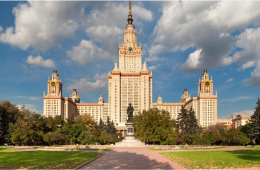
Founded in 1948 and based in Katowice 🇵🇱, this is one of Poland’s oldest and most established medical schools, drawing students from more than 50 countries. Its six-year MD programme runs on 360 ECTS credits, and tuition typically falls in the range of €14,000 to €16,000 a year — the kind of figure that starts looking a lot more reasonable once several years of credit transfer are factored in. The university’s academic board reviews physiotherapy transcripts directly, matching musculoskeletal and physiology coursework to determine exactly where you’d start.
📍 Poznan University of Medical Sciences
Poznan 🇵🇱 traces its roots back to 1919 and has held full university status since 2007, making it one of the largest clinical and research centres in Poland today, with a reported graduate pass rate above 90%. What makes it particularly interesting for physiotherapists is that Poznan already runs its own five-year MSc Physiotherapy programme alongside its six-year MD — so the university’s admissions team is genuinely familiar with allied-health transcripts, not just pre-med ones, and knows how to map that coursework onto its clinical route.
📅 Trying to untangle international admissions rules, credit-matching policies, and tuition structures on your own can eat up weeks. Join our next free online session for a clear, no-fluff breakdown of what’s actually available to you.
- 💰 In the session, we’ll cover real tuition figures, entry requirements, and the costs that rarely get mentioned upfront.
- 📖 You’ll also see exactly how European universities evaluate physiotherapy credits — and how much time that can actually shave off your degree.
🧠 Which of Your Old Modules Actually Count Toward Your Medical Degree? (Anatomy, Musculoskeletal, and Physiology)
Physiotherapy degrees are unusually science-heavy compared to most pre-med backgrounds, which is exactly why the exemptions run so deep. Most physiotherapy to medicine credit transfer pathways will waive substantial chunks of:
- 🦴 Anatomy and Musculoskeletal Systems — arguably your strongest suit already
- 🫀 Human Physiology — the foundation you’ve been applying clinically for years
- 🏃 Kinesiology and Biophysics — core physiotherapy territory that overlaps directly with preclinical medicine
⏱️ So, How Fast Could You Actually Qualify as an MD?
A standard European medical degree runs six years from a standing start. Stack a strong physiotherapy transcript against that, and a well-matched credit transfer can bring your timeline down to just 4 to 5 years — which, for someone already working full-time as a clinician, can be the difference between “someday” and an actual, plannable date to become a doctor.
It’s not the only accelerated medical degree for physical therapists out there, either — the 🌴 Caribbean also runs 4-year graduate-entry MD programmes for degree-holders. Before you commit to a region, it’s worth comparing how 🇪🇺 Graduate Entry Medicine in Europe stacks up against that route in terms of cost, recognition, and how each handles credit for your physiotherapy background — because the fastest path on paper isn’t always the smartest one for your specific goals.