Breaking Stereotypes: Debunking Myths About Studying Abroad
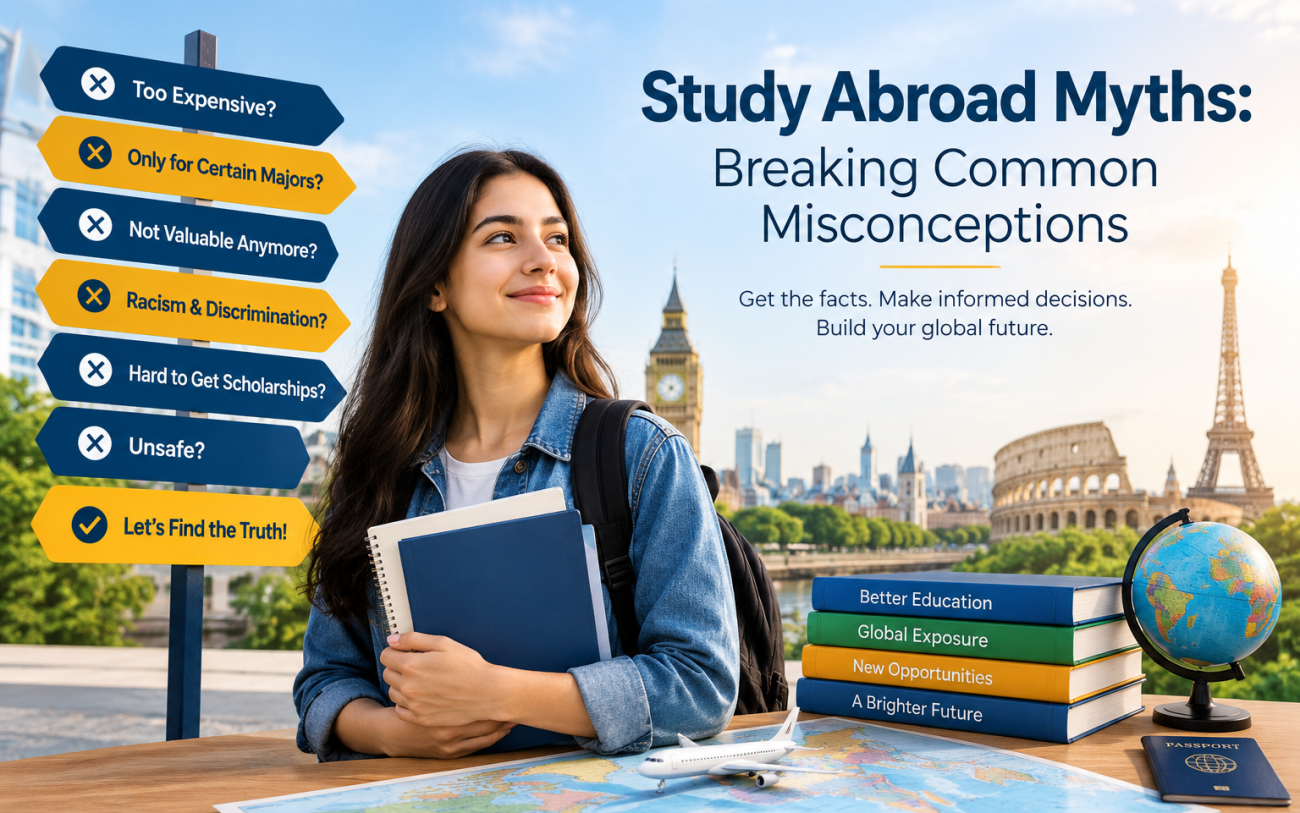
Studying abroad can be a life-changing opportunity. It allows students to experience a new culture, access different education systems, develop international networks, and prepare for global career opportunities. However, many students hesitate to pursue international education because of common myths and misconceptions.
From concerns about high tuition fees to worries about scholarships, admission requirements, language barriers, safety, and discrimination, these misconceptions can sometimes prevent students from exploring opportunities that may actually be suitable for them.
The reality is that every study abroad destination, university, and program is different. Instead of relying on assumptions, students should research their options carefully and make decisions based on their academic goals, budget, career plans, and personal circumstances.
In this guide, we will debunk common study abroad myths and explain what students should consider before making their decision.
Table of Contents
- Is studying abroad too expensive?
- Are study abroad programs limited to certain majors?
- Is studying abroad still valuable?
- Is racism a major barrier for international students?
- Are scholarships difficult to get?
- Is it difficult to get admission to top universities?
- Do international students need to speak the local language?
- Is studying abroad unsafe?
- How can students make an informed study abroad decision?
- Final thoughts
Is Studying Abroad Too Expensive?
One of the most common study abroad myths is that international education is always unaffordable.
The reality is more complicated. The total cost of studying abroad depends on several factors, including the destination country, university, degree program, city, accommodation, living expenses, and available financial aid.
Some destinations and universities can be significantly more affordable than others. Students can also explore public universities, scholarships, tuition reductions, affordable accommodation, and other funding options.
What should students consider?
Before choosing a university, calculate the estimated cost of:
- Tuition fees
- Accommodation
- Food and daily expenses
- Health insurance
- Visa and application fees
- Travel costs
- Books and study materials
- Transportation
- Emergency expenses
Instead of asking, “Is studying abroad expensive?”, ask “Which study abroad destination fits my budget?”
This approach can help students make a more realistic financial plan.
Are Study Abroad Programs Limited to Certain Majors?
Another misconception is that studying abroad is only suitable for students studying engineering, medicine, business, or other popular fields.
In reality, universities around the world offer programs across a wide range of academic disciplines.
Students may find international programs in areas such as:
- Engineering
- Computer Science
- Business and Management
- Finance and Accounting
- Medicine and Health Sciences
- Architecture
- Arts and Design
- Media and Communication
- Social Sciences
- Law
- Environmental Sciences
- Hospitality and Tourism
- Languages and Literature
However, program availability and admission requirements vary by university and country.
Students should therefore search for universities that offer programs matching their academic background and long-term career goals.
Is Studying Abroad No Longer Valuable?
Some people believe that because more students are studying overseas, an international degree is no longer valuable.
This is one of the most persistent misconceptions about studying abroad.
The value of an international education depends on the quality and recognition of the institution, the relevance of the program, the skills gained, and the student’s overall experience.
Studying abroad can expose students to:
- Different teaching methods
- International perspectives
- Diverse cultures
- Global professional networks
- Independent problem-solving
- Cross-cultural communication
- New academic and professional opportunities
An international degree should not be viewed as an automatic guarantee of career success. Instead, it can be one component of a student’s education and professional development.
Is Racism a Major Barrier for International Students?
Concerns about discrimination can make students and parents hesitant about studying abroad.
It is important to recognize that experiences can vary depending on the country, city, institution, community, and individual circumstances. No destination can be described as completely free from discrimination.
At the same time, many universities have policies, student support services, international student offices, and diversity initiatives designed to support students from different backgrounds.
Before applying, students should research:
- University diversity policies
- International student support
- Student organizations
- Campus resources
- Accommodation arrangements
- Local community environment
- Official complaint and support procedures
Researching these factors can help students make a more informed decision rather than relying on stereotypes or isolated experiences.
Are Scholarships Difficult to Get?
Another common study abroad myth is that scholarships are almost impossible to obtain.
Scholarships do exist for international students, but competition can be strong and eligibility requirements vary considerably.
Depending on the destination and institution, funding opportunities may include:
- Merit-based scholarships
- Need-based financial aid
- University scholarships
- Government scholarships
- Research funding
- Tuition fee waivers
- Graduate assistantships
Students should carefully check the eligibility criteria, application deadlines, academic requirements, and supporting documents for each scholarship.
How can students improve their scholarship opportunities?
Start researching early. A strong academic record can help, but some scholarships may also consider extracurricular activities, leadership experience, personal statements, research experience, professional achievements, or financial circumstances.
Most importantly, students should never assume that they are automatically ineligible. Check the official scholarship requirements before making a decision.
Is It Difficult to Get Admission to Top Universities?
Getting admission to a highly ranked university can certainly be competitive, but the idea that international students cannot get into top universities is a misconception.
Universities assess applicants according to their own admission criteria. Depending on the program, this may include:
- Academic qualifications
- Grades and academic performance
- English language proficiency
- Entrance examinations
- Personal statements
- Recommendation letters
- Work experience
- Research experience
- Portfolio or auditions
- Extracurricular activities
Admission requirements vary significantly between institutions and programs.
A student’s goal should therefore be to build a strong application and identify universities where their academic profile, budget, and career objectives align with the available requirements.
Do International Students Need to Speak the Local Language?
Language is another area where misconceptions can discourage students.
Many universities offer degree programs taught entirely or primarily in English, particularly at the postgraduate level and in internationally oriented programs. However, this does not mean that learning the local language has no value.
Knowing the local language can make everyday life easier and help students communicate with the local community.
Before applying, students should check:
- The language of instruction.
- The required English language test.
- Minimum language scores.
- Whether the program requires additional language skills.
- Whether language preparation courses are available.
The language requirements should always be checked directly with the university or relevant official authority.
Is Studying Abroad Unsafe?
Safety is understandably one of the biggest concerns for students and parents.
However, it is inaccurate to assume that studying abroad is automatically unsafe. Safety conditions differ between countries, cities, universities, and neighborhoods.
Students should research their specific destination rather than judging an entire country based on news reports or individual incidents.
Before travelling, consider:
- Official travel advice
- University safety policies
- Emergency contact numbers
- Student accommodation
- Local transportation
- Healthcare facilities
- Campus security
- Local laws and regulations
Universities often provide international students with orientation programs and guidance on safety, accommodation, healthcare, and emergency procedures.
Being prepared and understanding the local environment can help students adjust more confidently.
How Can Students Avoid Study Abroad Myths?
The best way to overcome study abroad misconceptions is to replace assumptions with reliable information.
Before choosing a destination, students should:
1. Research the country
Understand tuition fees, living costs, visa requirements, employment rules, and student regulations.
2. Compare universities
Look beyond rankings. Compare programs, curriculum, accreditation, facilities, location, tuition fees, and student support.
3. Check official requirements
Always verify admission and visa requirements through official university and government sources.
4. Create a realistic budget
Calculate tuition and living expenses before applying.
5. Search for scholarships
Look for university, government, and other legitimate funding opportunities.
6. Consider your career goals
Choose a program that supports your academic interests and long-term professional plans.
7. Speak with experienced people
Current students, alumni, university representatives, and qualified education advisers can provide useful perspectives.
The Reality of Studying Abroad
Studying abroad is neither an effortless path to success nor an opportunity that is impossible to achieve.
The experience depends on many factors, including the student’s preparation, destination, university, academic program, financial planning, and personal circumstances.
The most important thing is to separate study abroad facts from myths.
A student should not reject an international education simply because someone says it is too expensive, impossible to access, unsafe, or unsuitable for their field. At the same time, students should avoid assuming that every country or university will provide the same experience.
Good research leads to better decisions.
Final Thoughts: Make an Informed Study Abroad Decision
Breaking stereotypes about studying abroad starts with asking the right questions.
International education can offer valuable academic, cultural, and professional experiences, but choosing the right destination requires careful planning. Students should evaluate universities, costs, scholarships, admission requirements, language requirements, safety information, and career opportunities before applying.
Don’t let common misconceptions decide your future. Instead, gather reliable information, compare your options, and create a study abroad plan that matches your goals and circumstances.
Your international education journey starts with informed preparation.