Study in Austria Study in Austria 2026
Study in Austria: Everything You Need to Know Before You Apply
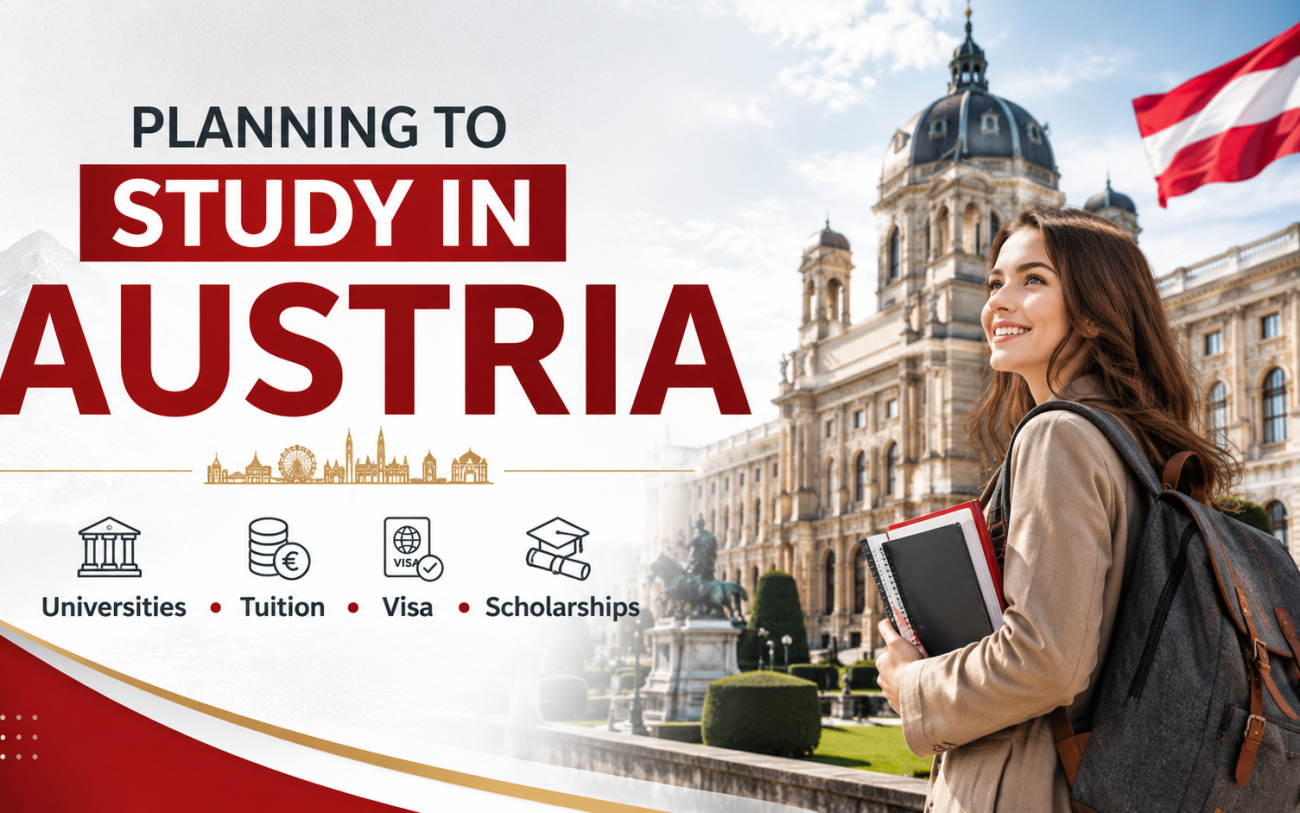
Austria is quietly becoming one of the most sought-after study destinations in Europe — and for good reason. The country combines world-class universities, affordable education, and a genuinely high quality of life that students from around the world are starting to notice.
This guide is for international students who are seriously considering studying in Austria and want straight answers about how to make it happen.
Here’s what we’ll cover:
-
Where to study — the top universities in Austria and the most popular fields of study international students are choosing
-
How to get in — a clear breakdown of admission requirements, the application process, and student visa essentials
-
What it costs — real numbers on tuition fees, living expenses, and scholarships that can help cover them
No fluff, no vague advice — just the practical information you need to decide if Austria is the right move for you.
Why Austria Is a Top Study Destination
World-Class Universities and Academic Excellence
Austria punches well above its weight academically. Universities like the University of Vienna (founded in 1365) and TU Wien consistently rank among Europe’s best, offering rigorous programs backed by centuries of scholarly tradition. Austrian degrees are recognized worldwide, giving graduates a real competitive edge.
Affordable Tuition Fees Compared to Other European Countries
One of Austria’s biggest draws is its accessible tuition structure:
| Student Type | Approximate Annual Tuition |
|---|---|
| EU/EEA Students | €0 – €726 |
| Non-EU Students | €726 – €1,500 |
| Private Universities | €5,000 – €20,000+ |
Compare this to the UK or Ireland, where fees easily hit €15,000–€30,000 per year. Austria simply makes quality education more reachable.
Rich Cultural Heritage and High Quality of Life
Austria regularly tops global quality-of-life rankings — Vienna has held the title of world’s most livable city multiple times. Students get to enjoy:
-
A thriving arts, music, and café culture scene
-
Excellent public transport and healthcare
-
Safe, walkable cities with stunning architecture
-
Easy access to neighboring countries like Germany, Italy, and Hungary
Studying here means getting a world-class education while actually enjoying your daily life.
Top Universities in Austria to Consider
University of Vienna and Its Global Rankings
Founded in 1365, the University of Vienna is Austria’s oldest and largest university. It consistently ranks among the top 150 universities worldwide and is particularly strong in humanities, social sciences, and natural sciences.
-
Students: Over 90,000 enrolled
-
Programs: 180+ degree programs in English and German
-
Ranking: QS World University Rankings Top 150
Technical University of Vienna for STEM Enthusiasts
TU Wien is the go-to choice for engineering, computer science, and technology students. It has strong industry ties with companies like Siemens and Bosch, giving students real-world exposure alongside academic training.
-
Known for cutting-edge research in automation and AI
-
Offers several fully English-taught master’s programs
-
Strong graduate employment rate
University of Innsbruck for Research Opportunities
Nestled in the Alps, the University of Innsbruck punches well above its size in research output. It’s especially respected in physics, environmental sciences, and law.
-
Home to multiple Nobel Prize-winning research traditions
-
Excellent funding for doctoral researchers
-
Stunning mountain location that attracts international students
Vienna University of Economics and Business for Aspiring Professionals
WU Vienna is AACSB and EQUIS accredited — a rare double distinction held by only about 1% of business schools globally.
| Feature | Details |
|---|---|
| Specialty | Business, Economics, Law |
| Language | English & German programs |
| Network | Strong EU corporate connections |
Popular Fields of Study in Austria
Business and Economics Programs
Austria punches well above its weight in business education. Vienna, as a gateway between Western and Eastern Europe, makes it a natural hub for international business studies.
Top picks:
-
Vienna University of Economics and Business (WU) – one of the largest business universities in Europe
-
University of Linz – strong focus on economics and social sciences
-
MCI Innsbruck – excellent management and entrepreneurship programs
Many programs are offered in English, making them accessible to international students.
Engineering and Technology Courses
Austrian engineering programs are deeply respected globally, especially in mechanical, electrical, and environmental engineering.
-
TU Wien and TU Graz consistently rank among Europe’s leading technical universities
-
Strong industry partnerships mean hands-on experience from day one
-
Growing focus on renewable energy and sustainable technology
Arts, Music, and Humanities Degrees
Austria’s cultural legacy makes it a dream destination for creative students.
| Discipline | Notable Institution |
|---|---|
| Classical Music | University of Music Vienna |
| Fine Arts | Academy of Fine Arts Vienna |
| Film & Media | Film Academy Vienna |
Vienna shaped Mozart, Klimt, and Freud — studying here means absorbing that creative energy firsthand.
Admission Requirements and Application Process
Academic Qualifications You Need to Meet
Austrian universities typically require a secondary school diploma equivalent to the Austrian Matura. If you completed high school outside Austria, your credentials go through a recognition process called Nostrifizierung.
-
Bachelor’s programs: Completed secondary education (12–13 years)
-
Master’s programs: Relevant bachelor’s degree
-
PhD programs: Master’s degree in a related field
Language Proficiency Requirements for English and German Programs
| Program Language | Accepted Tests | Minimum Score |
|---|---|---|
| German | ÖSD, TestDaF, Goethe | B2–C1 level |
| English | IELTS, TOEFL | 6.0+ / 80+ |
Some universities waive requirements if your previous education was in that language.
How to Prepare a Strong Application
-
Write a focused statement of purpose tied to your specific program
-
Request recommendation letters early — professors get busy
-
Tailor your CV to highlight relevant academic and research experience
-
Double-check that all documents are officially translated and notarized
Key Deadlines You Should Not Miss
-
Winter semester: Applications typically close between January and March
-
Summer semester: Deadlines usually fall in October–November
-
Scholarship deadlines often come before university deadlines, so plan backwards from those
Tuition Fees and Cost of Living in Austria
Understanding Tuition Fees for EU and Non-EU Students
| Student Type | Annual Tuition Fee |
|---|---|
| EU/EEA Students | ~€726 per semester (€1,452/year) |
| Non-EU Students | ~€726 + €726 surcharge = €1,452/semester |
| PhD Students (EU) | Often free at public universities |
Private universities charge significantly more — typically €5,000–€15,000 per year depending on the program.
Average Monthly Living Expenses in Major Cities
| Expense | Vienna | Graz | Salzburg |
|---|---|---|---|
| Rent (student room) | €600–€900 | €450–€700 | €500–€750 |
| Food | €200–€300 | €180–€250 | €190–€270 |
| Transport | €30–€60 | €30–€50 | €30–€50 |
| Total Estimate | €900–€1,400 | €750–€1,100 | €800–€1,200 |
How to Budget Smartly as a Student
-
Student housing: Apply early for university dormitories — they’re cheaper than private rentals
-
Cook at home: Grocery shopping at Hofer or Lidl keeps food costs low
-
Public transport pass: The Vienna annual student pass costs around €75 — a serious deal
-
Student discounts: Museums, cinemas, and restaurants regularly offer reduced prices with a valid student ID
-
Part-time work: Non-EU students can work up to 20 hours per week legally
Scholarships and Financial Aid Opportunities
Austrian Government Scholarships for International Students
The Austrian government runs several solid funding programs worth exploring:
-
OeAD Scholarships – Covers research stays, university courses, and PhD programs
-
Ernst Mach Grant – Designed for short-term study and research visits
-
Franz Werfel Scholarship – Targets students from specific partner countries
University-Specific Grants and Funding Options
Most Austrian universities offer their own financial support:
-
University of Vienna – Performance-based grants and need-based support funds
-
TU Wien – Partial fee waivers for outstanding applicants
-
WU Vienna – Merit scholarships for international master’s students
External Scholarships You Can Apply For
| Scholarship | Who It’s For |
|---|---|
| Erasmus+ | EU/EEA students doing exchange programs |
| DAAD (German Service) | Occasionally covers Austria-based research |
| Fulbright (US students) | Graduate study and research in Austria |
| Home country grants | Check your national education ministry |
Tips for Winning a Scholarship Application
-
Apply early — deadlines often fall 6–12 months ahead
-
Tailor your motivation letter to each specific program
-
Get strong recommendation letters from professors who actually know your work
-
Show clear goals — vague applications rarely win
-
Proofread everything twice
Student Visa and Legal Requirements
Types of Visas Available for International Students
| Visa Type | Best For |
|---|---|
| Student Visa (Type D) | Programs longer than 6 months |
| Short-Stay Visa (Type C) | Language courses under 6 months |
| Student Residence Permit | Long-term degree programs |
Most degree students apply for a Type D Student Visa combined with a residence permit once they arrive.
Step-by-Step Visa Application Process
-
Get your university acceptance letter
-
Open a blocked bank account showing €13,000+ in funds
-
Gather documents: passport, health insurance, accommodation proof, enrollment confirmation
-
Book an appointment at the Austrian embassy in your home country
-
Submit your application at least 8–12 weeks before your course starts
-
Collect your visa and register with local authorities within 3 days of arriving in Austria
Processing times vary by country, so apply early.
Extending Your Stay After Graduation
Austria offers a Red-White-Red Card for graduates who want to work after finishing their degree. You get 12 months to job hunt after graduation. Key requirements:
-
Degree from an Austrian university
-
Job offer in a shortage occupation or earning above the minimum threshold
-
Proof of accommodation and health coverage
Student Life and Experience in Austria
Thriving Campus Communities and Student Organizations
Austrian universities buzz with clubs covering everything from debate and film to hiking and entrepreneurship. Universities like TU Wien and University of Vienna host hundreds of student-run organizations where you can dive in on day one.
-
International student clubs make settling in much easier
-
Cultural festivals run throughout the academic year
-
Student councils actively shape campus policies
Exploring Austria: Travel and Weekend Adventures
Austria’s central location is a genuine gift. Weekend trips to Prague, Budapest, or Venice are totally doable on a student budget.
-
Vienna’s public transport card covers most city adventures
-
ÖBB rail passes offer student discounts across Austria
-
Salzburg, Innsbruck, and Hallstatt are all within a short train ride
Part-Time Work Opportunities While Studying
Non-EU students can work up to 20 hours per week legally. Popular options include:
| Job Type | Average Hourly Pay |
|---|---|
| Café/Restaurant | €10–13 |
| University Assistant | €12–15 |
| Tutoring | €15–20 |
Building a Global Network During Your Studies
Austria attracts students from 130+ countries, so your classroom is already a global network. Erasmus events, startup meetups in Vienna, and international career fairs connect you with people who matter long after graduation.
Austria checks all the boxes for students looking for a well-rounded study experience — world-class universities, affordable tuition, rich culture, and a high quality of life. From the stunning streets of Vienna to the academic excellence of institutions like TU Wien and the University of Vienna, studying here means getting a great education while actually enjoying where you live.
If Austria feels like the right fit, start by researching programs that match your goals, get your documents in order early, and explore the scholarships available to international students. The process may take some planning, but the experience on the other side is absolutely worth it. Take that first step, reach out to universities directly, and make your study abroad dream a reality.